
Framed Relief Carvings
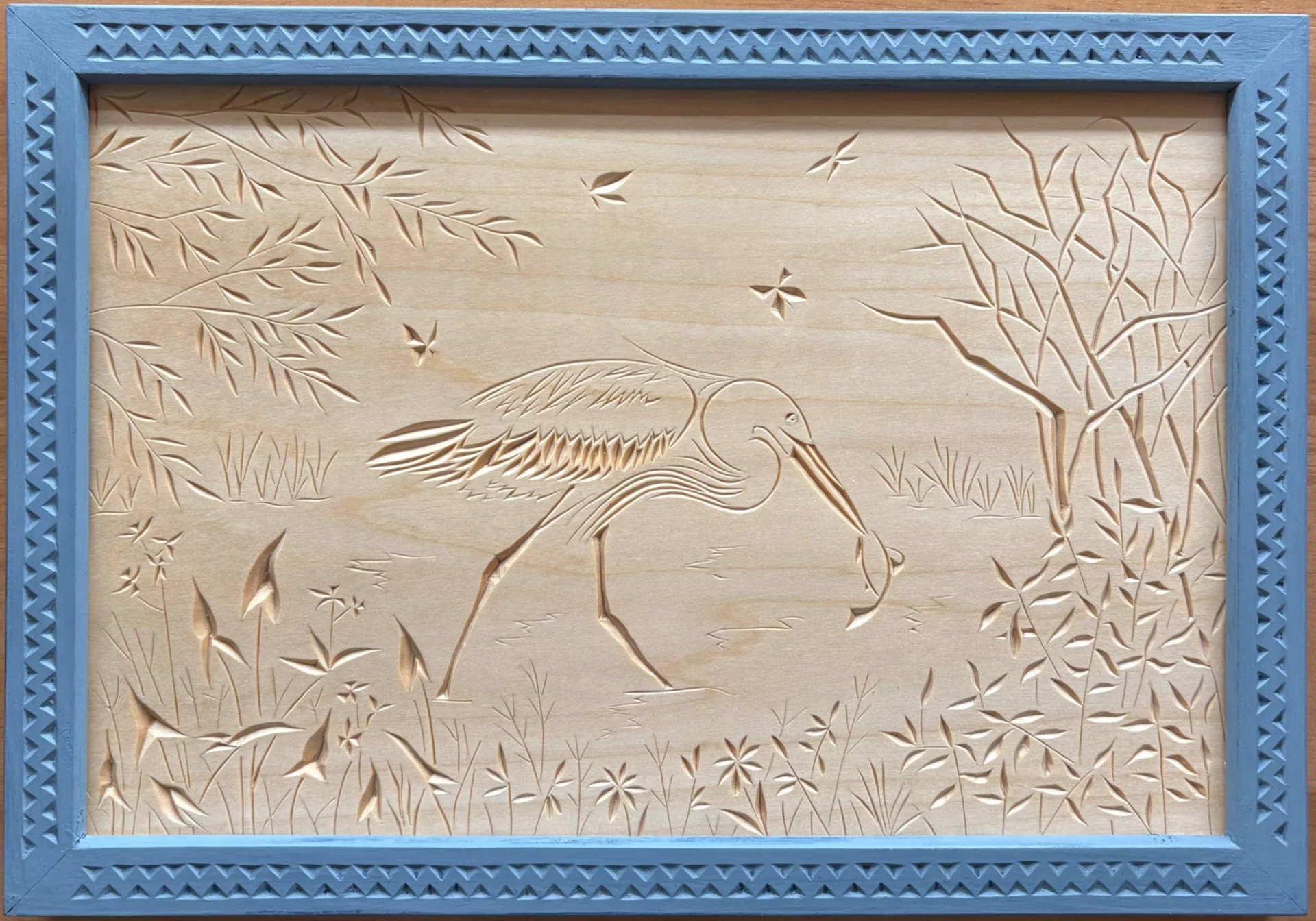
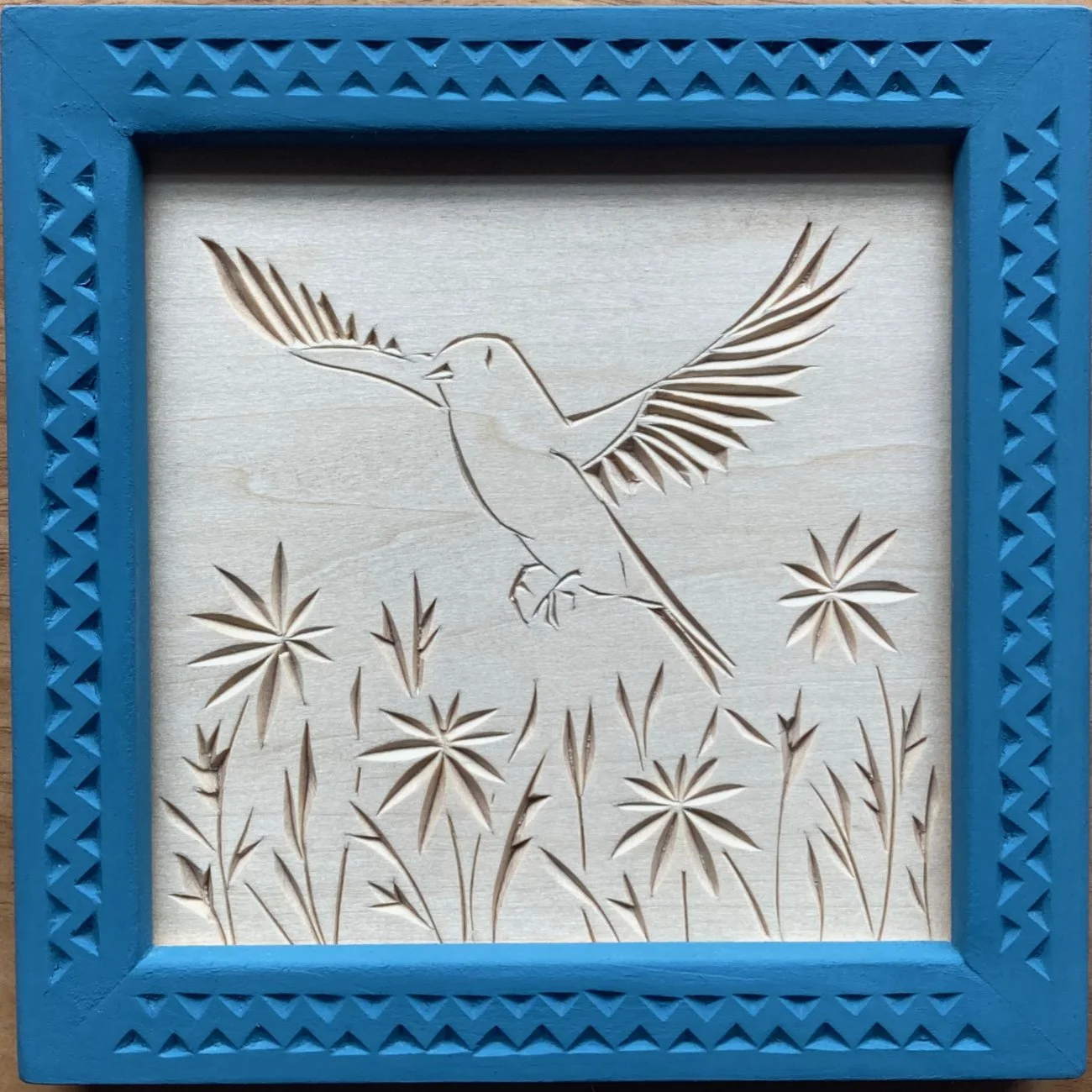
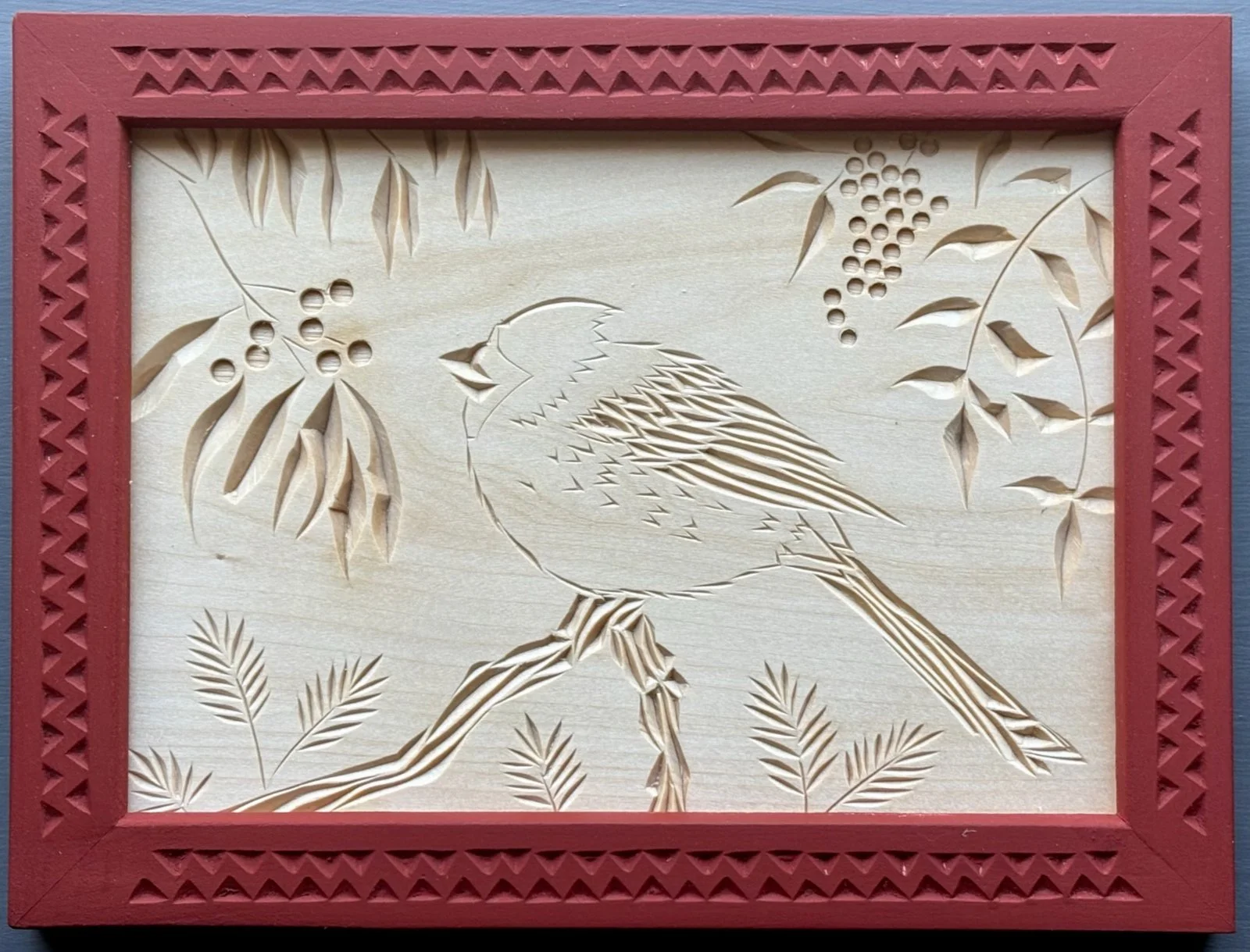
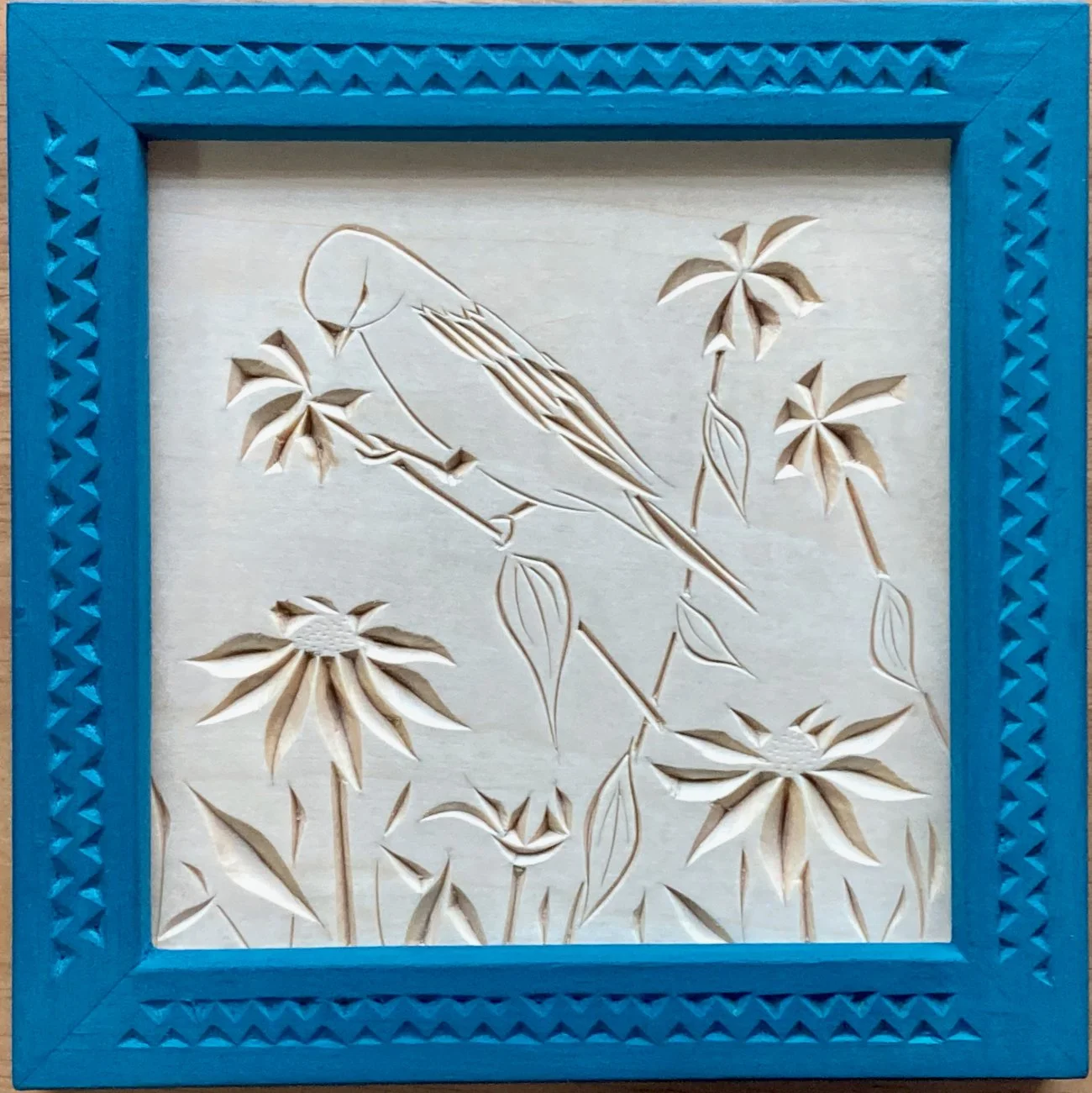
I work by chip-carving in thin sheets of basswood, using a thin-bladed knife, drawing inspiration from Pennsylvania Dutch folk art, the flowing lines of Art Nouveau, and the life of the North Carolina Piedmont. You can read more about my process below the gallery. To inquire about purchase please email me at woodwork@davidwalbert.com, and see my current page of featured and available carvings.
The clock has an 8-inch square face with a simple dark brown frame that hides has an American made mini quartz movement.
Functional objects


About the carvings
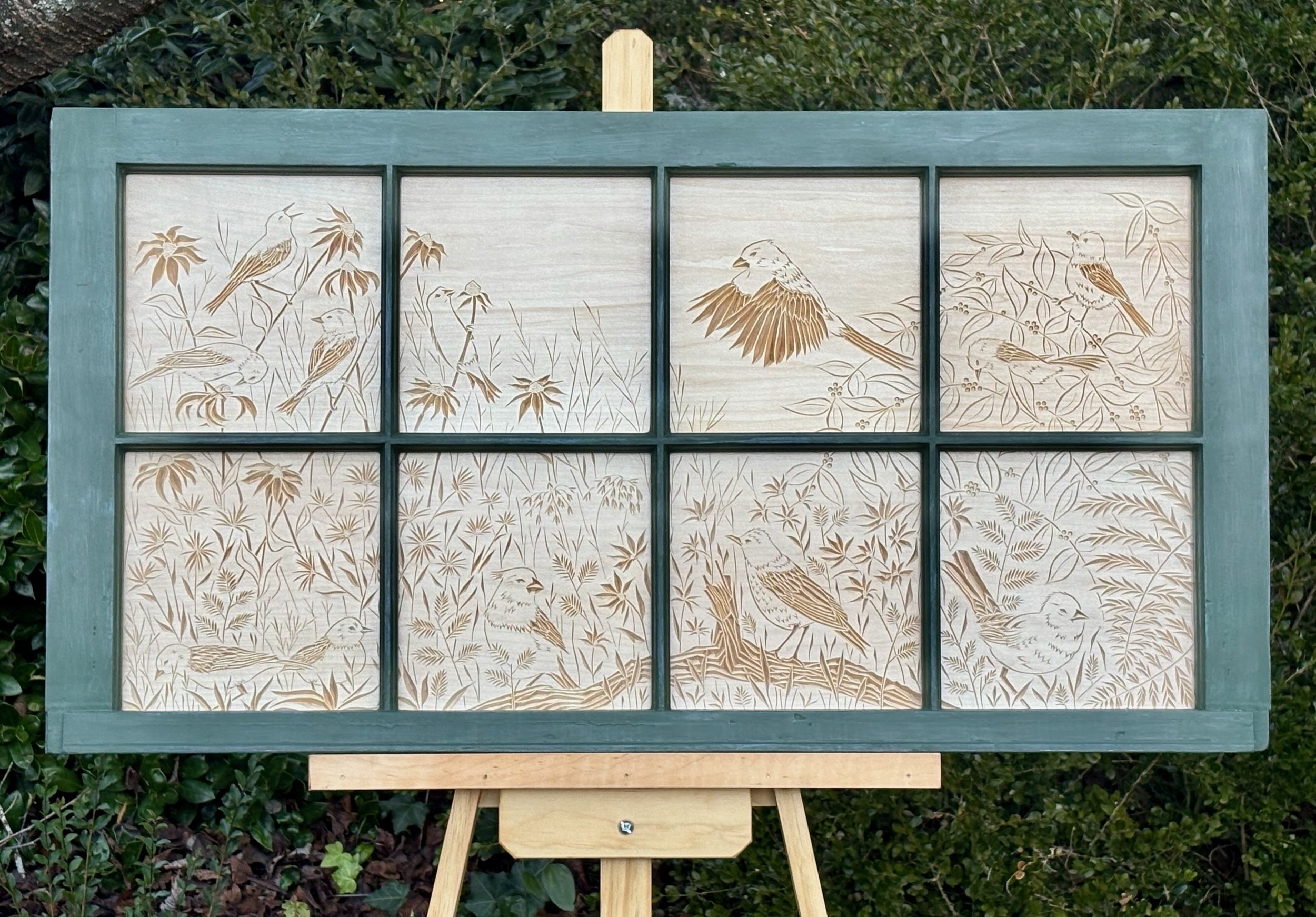
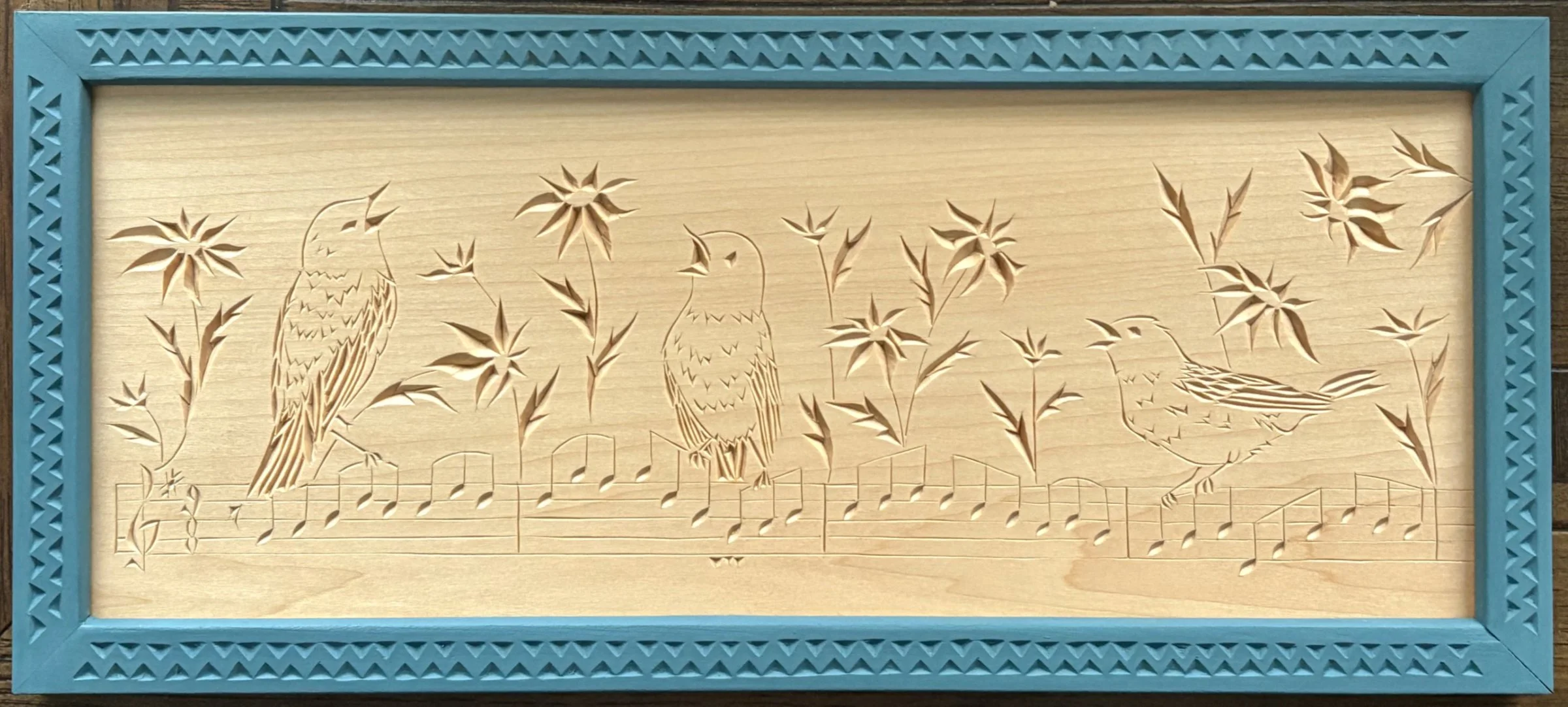
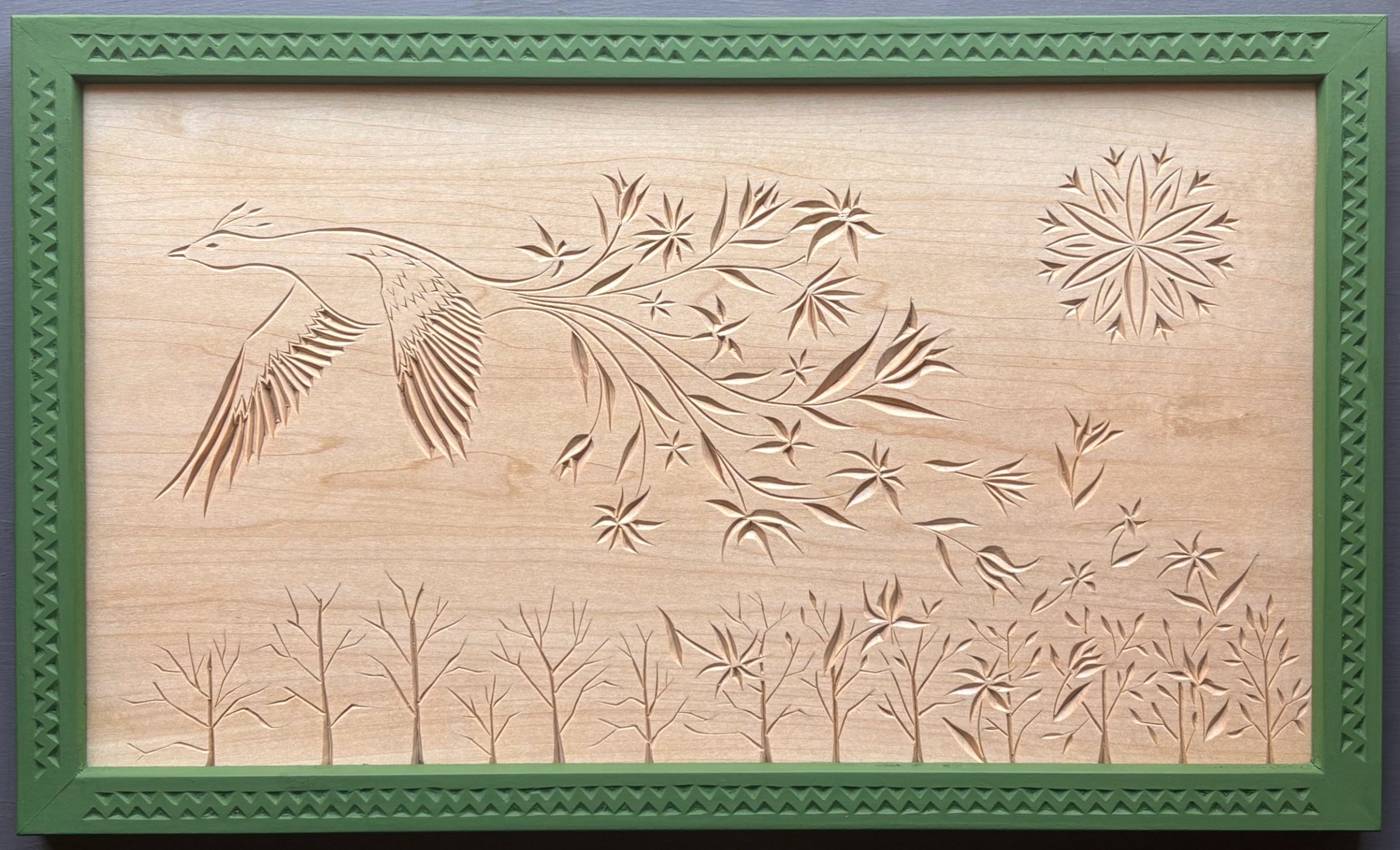
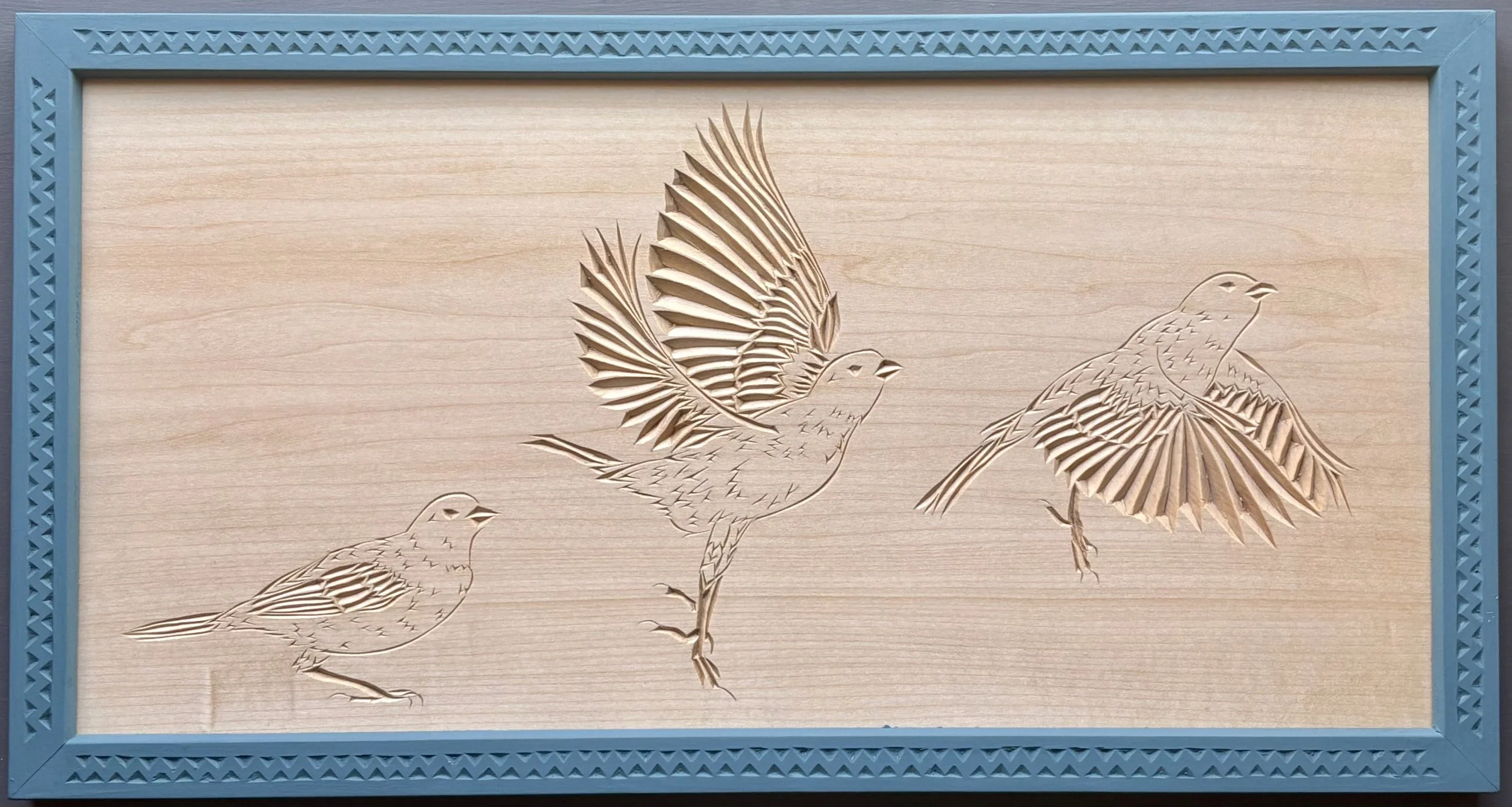
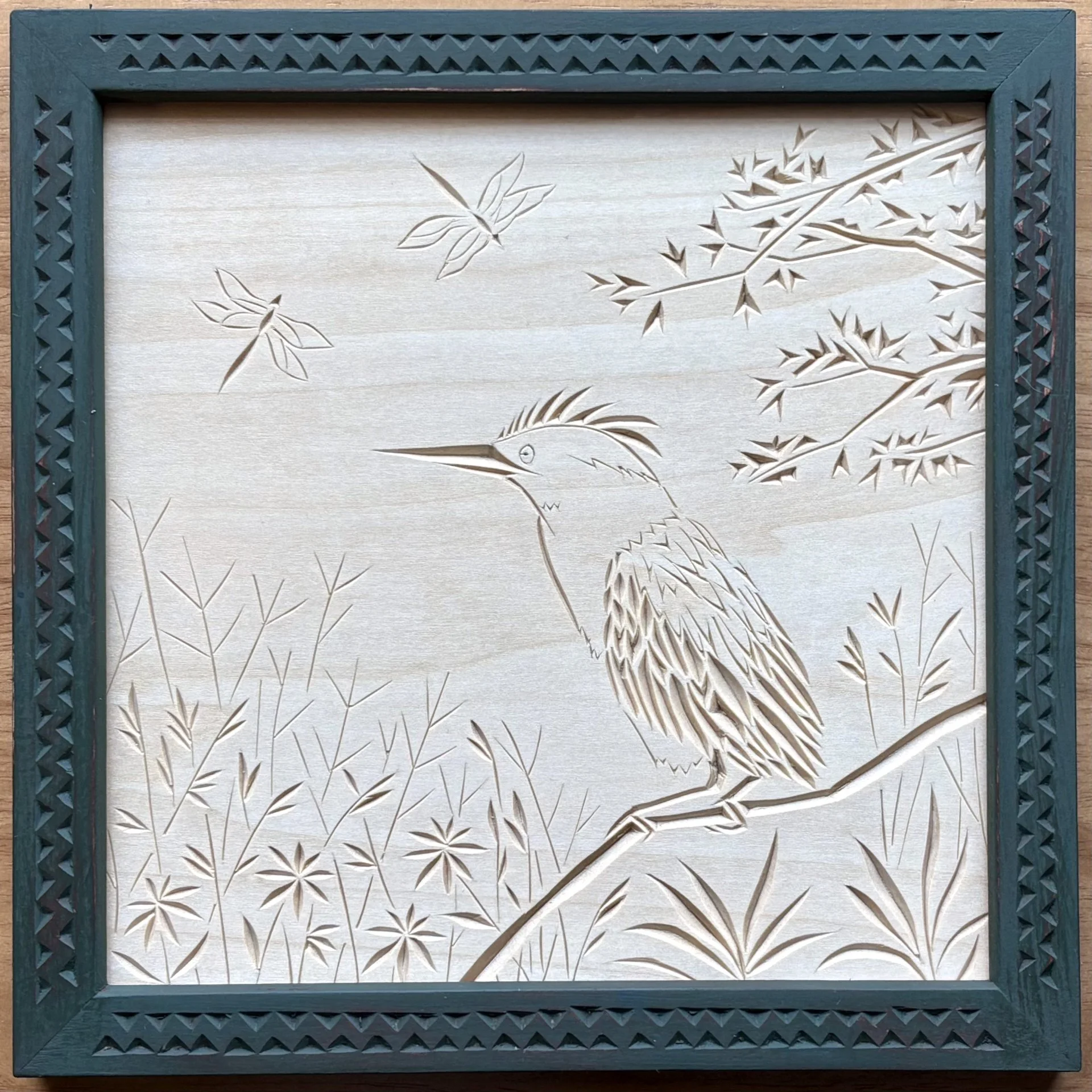
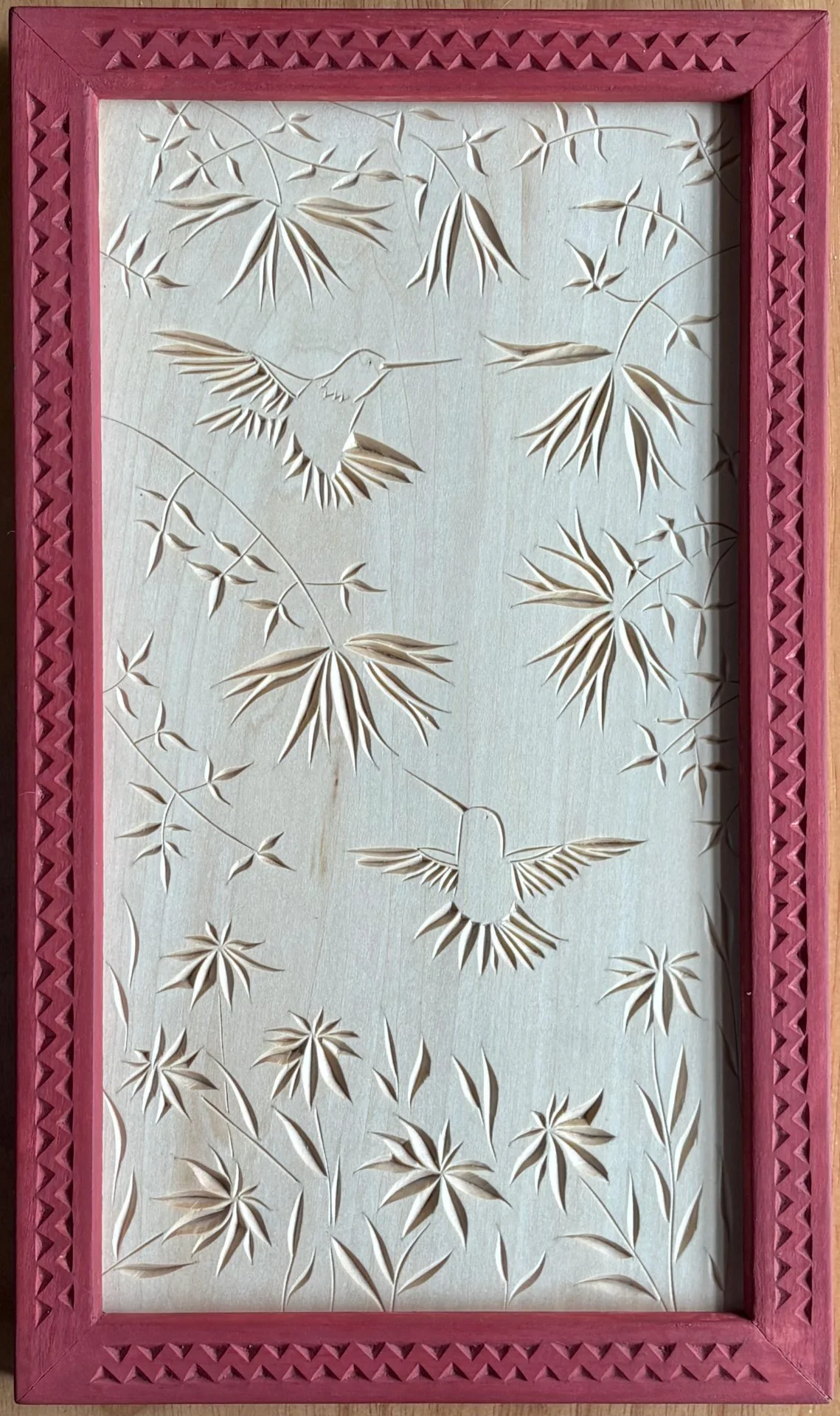
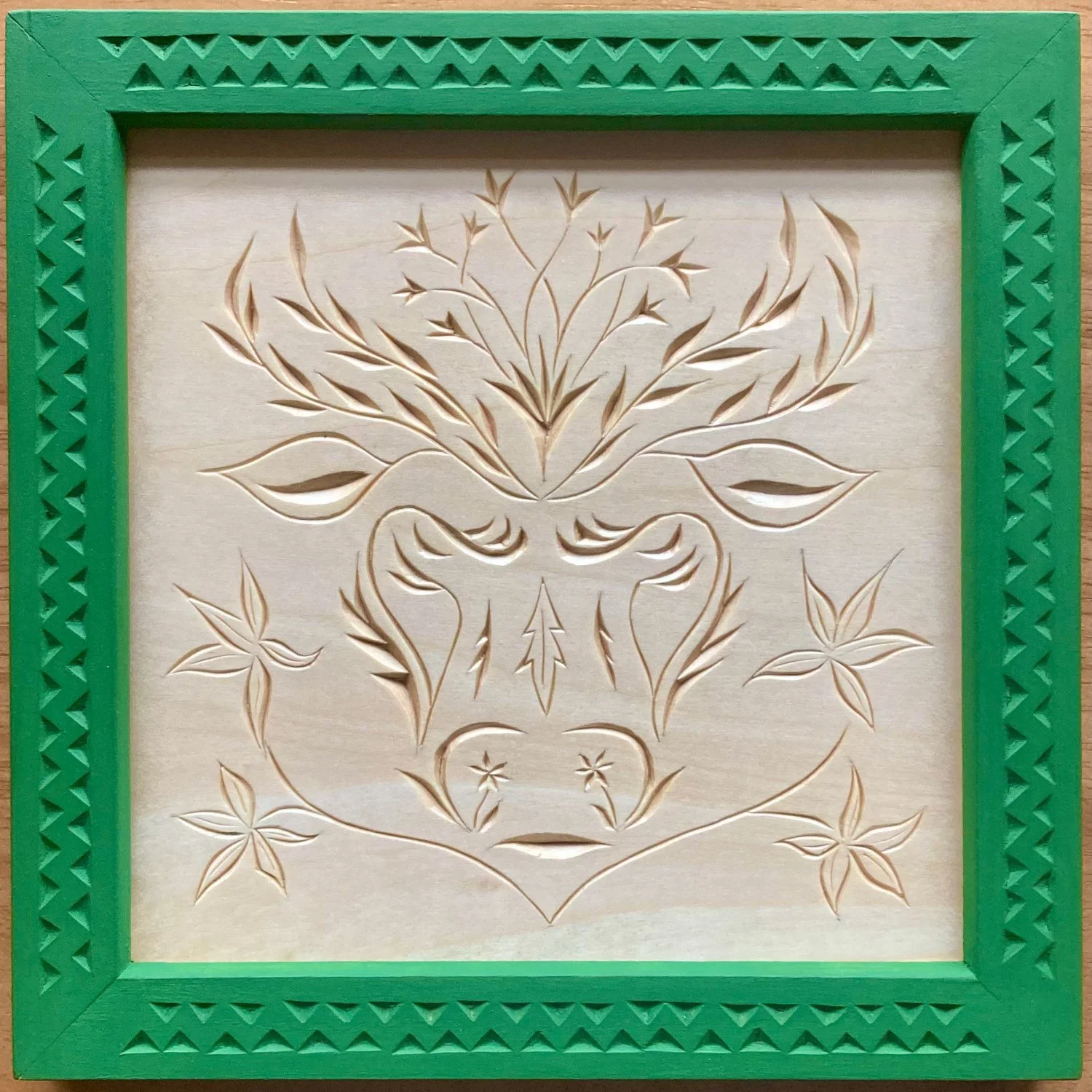
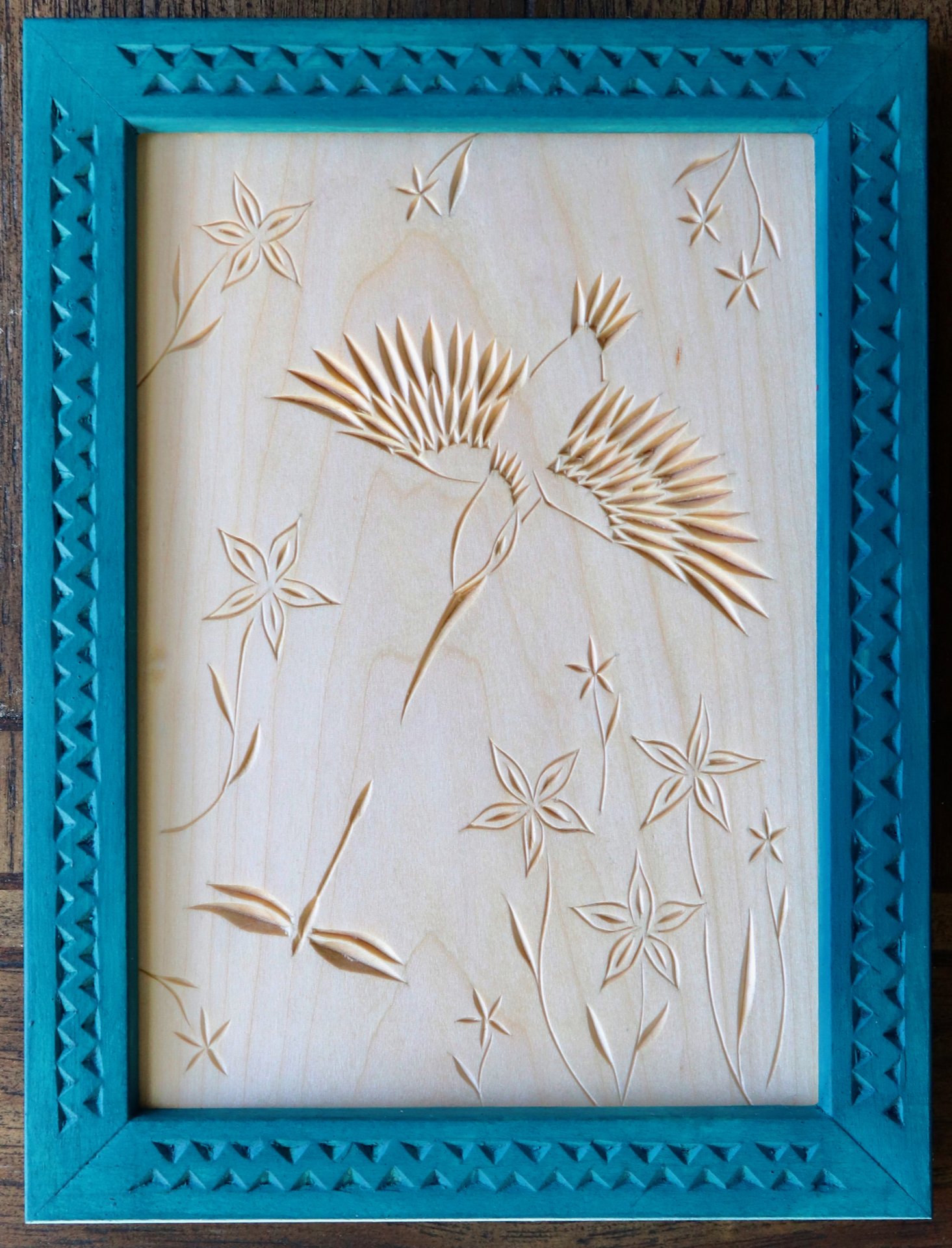
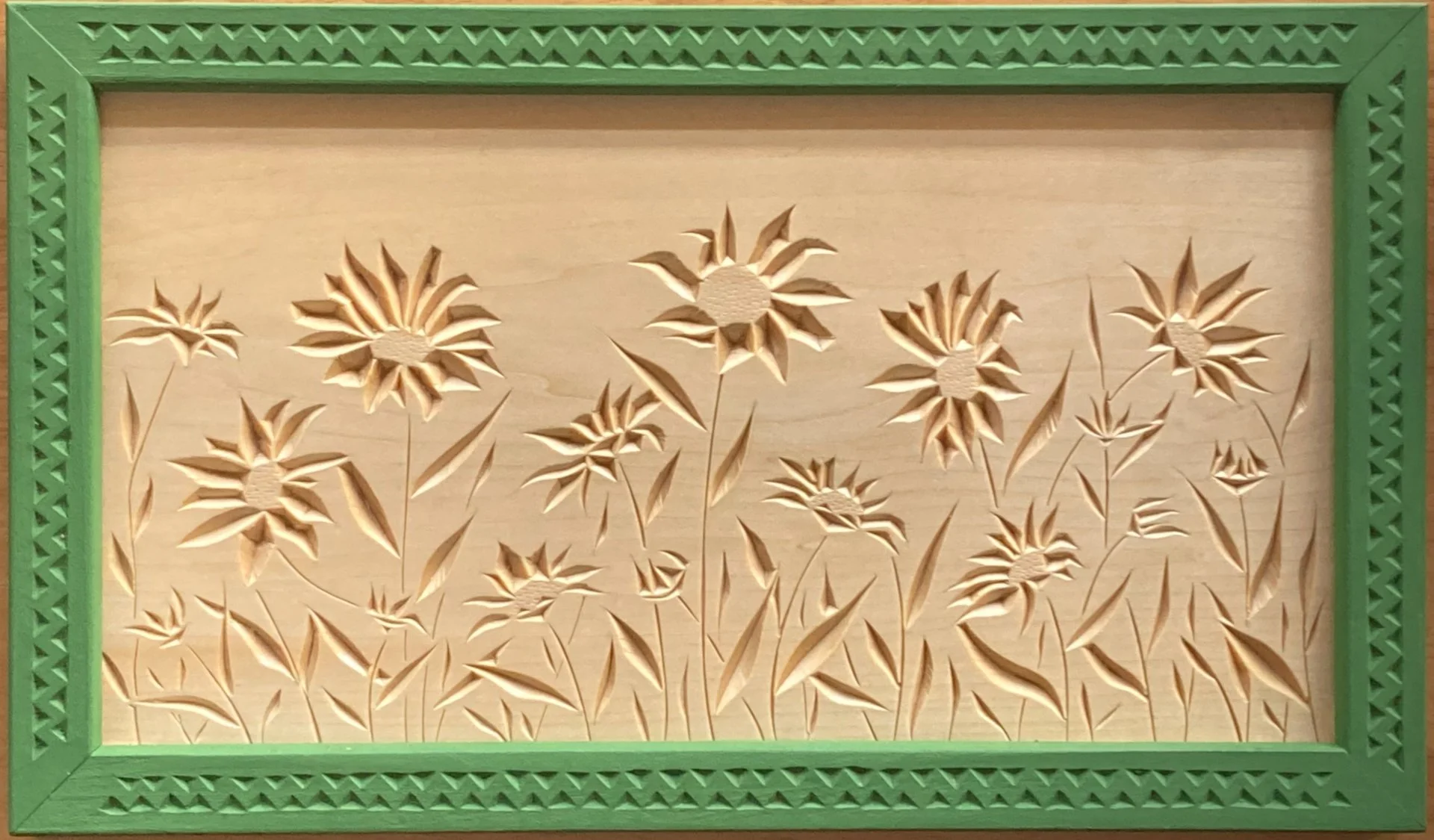
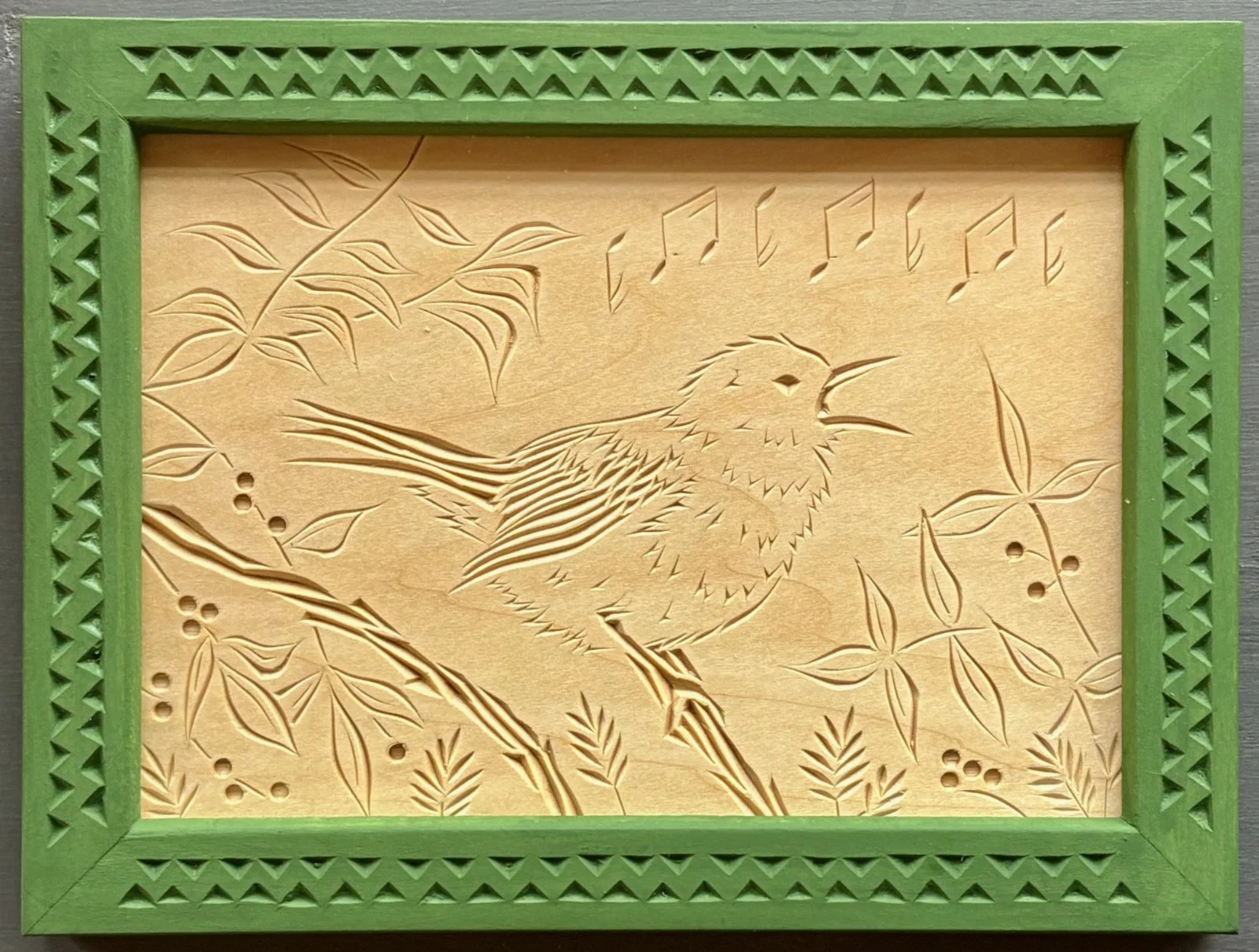
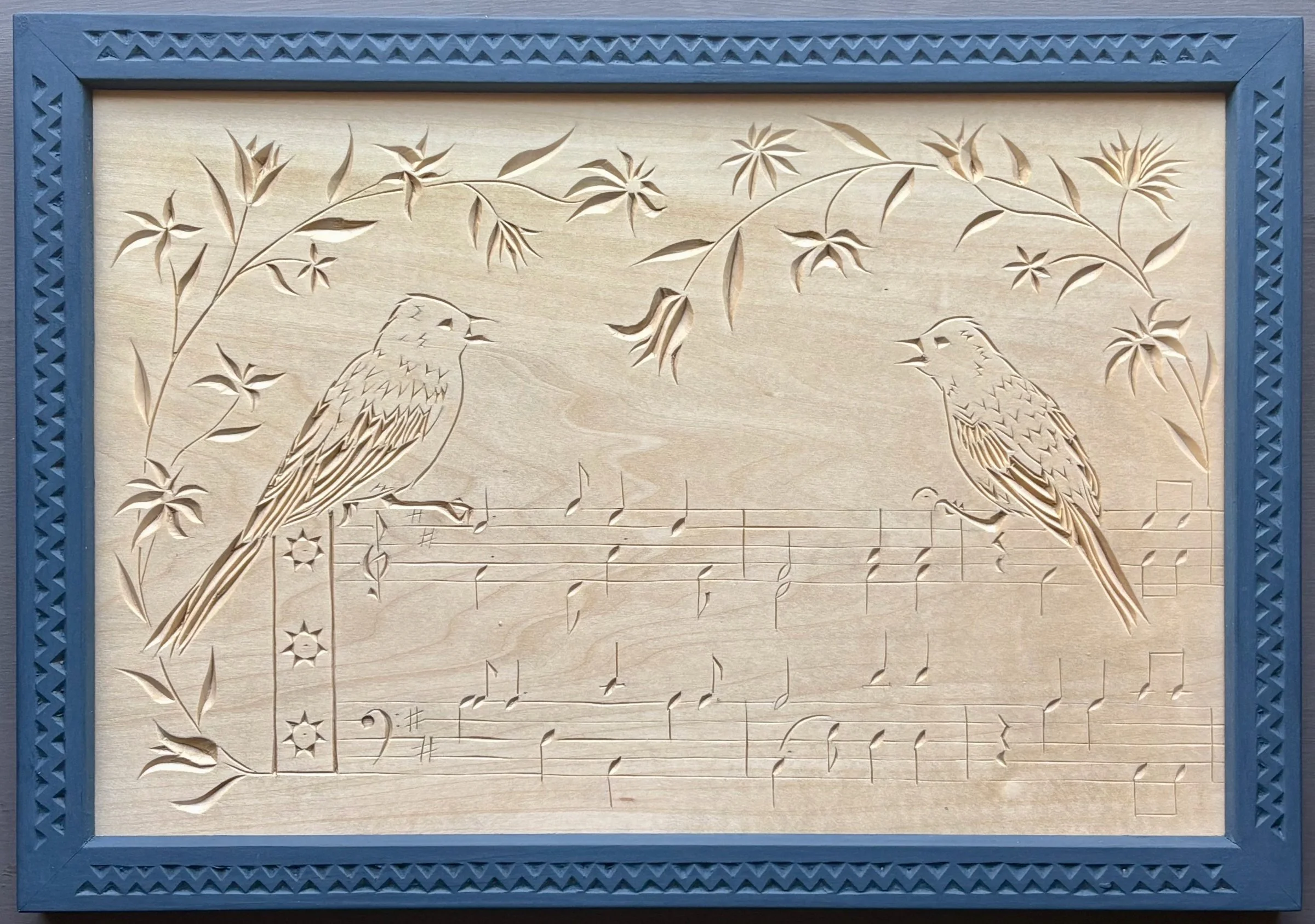
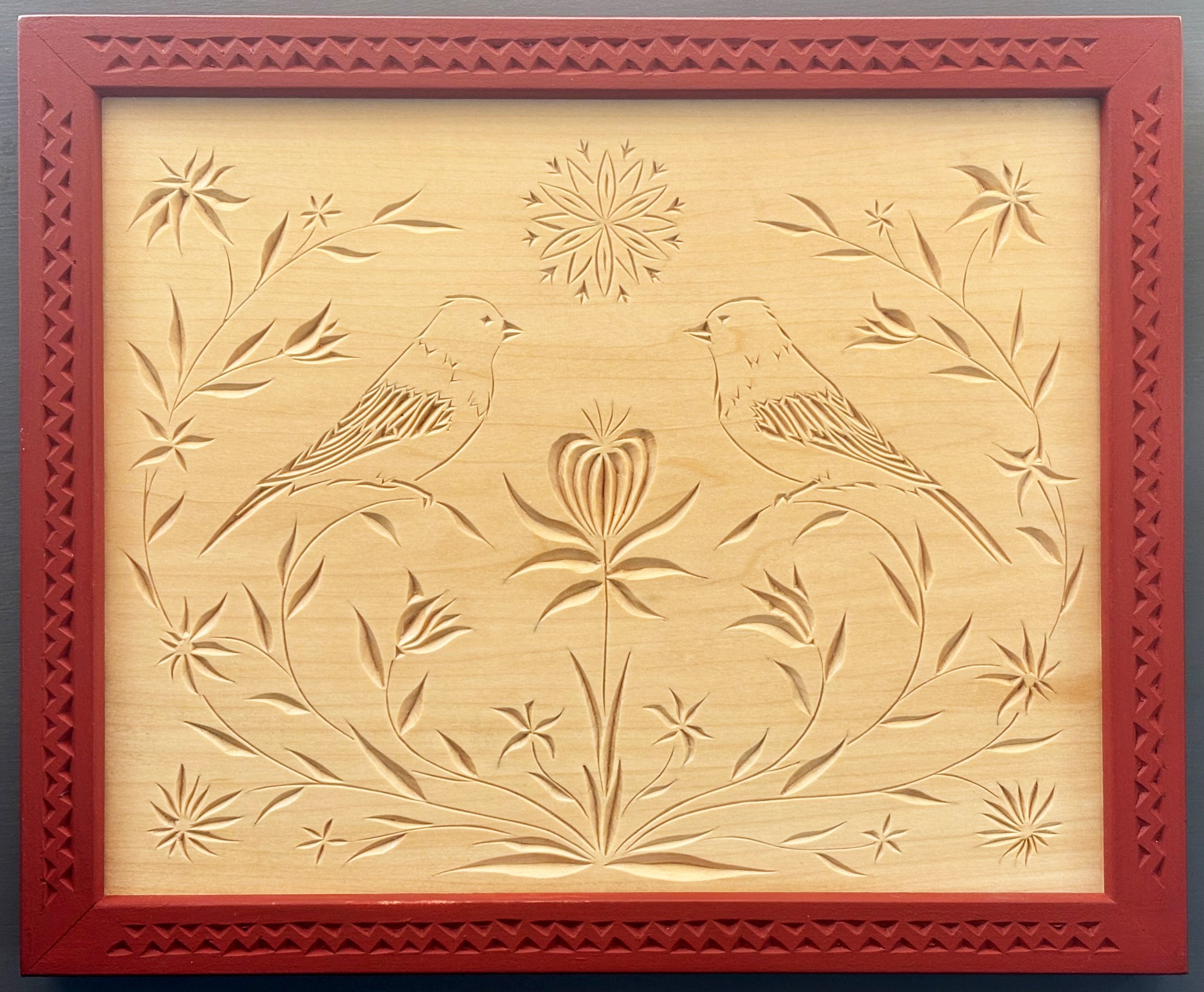
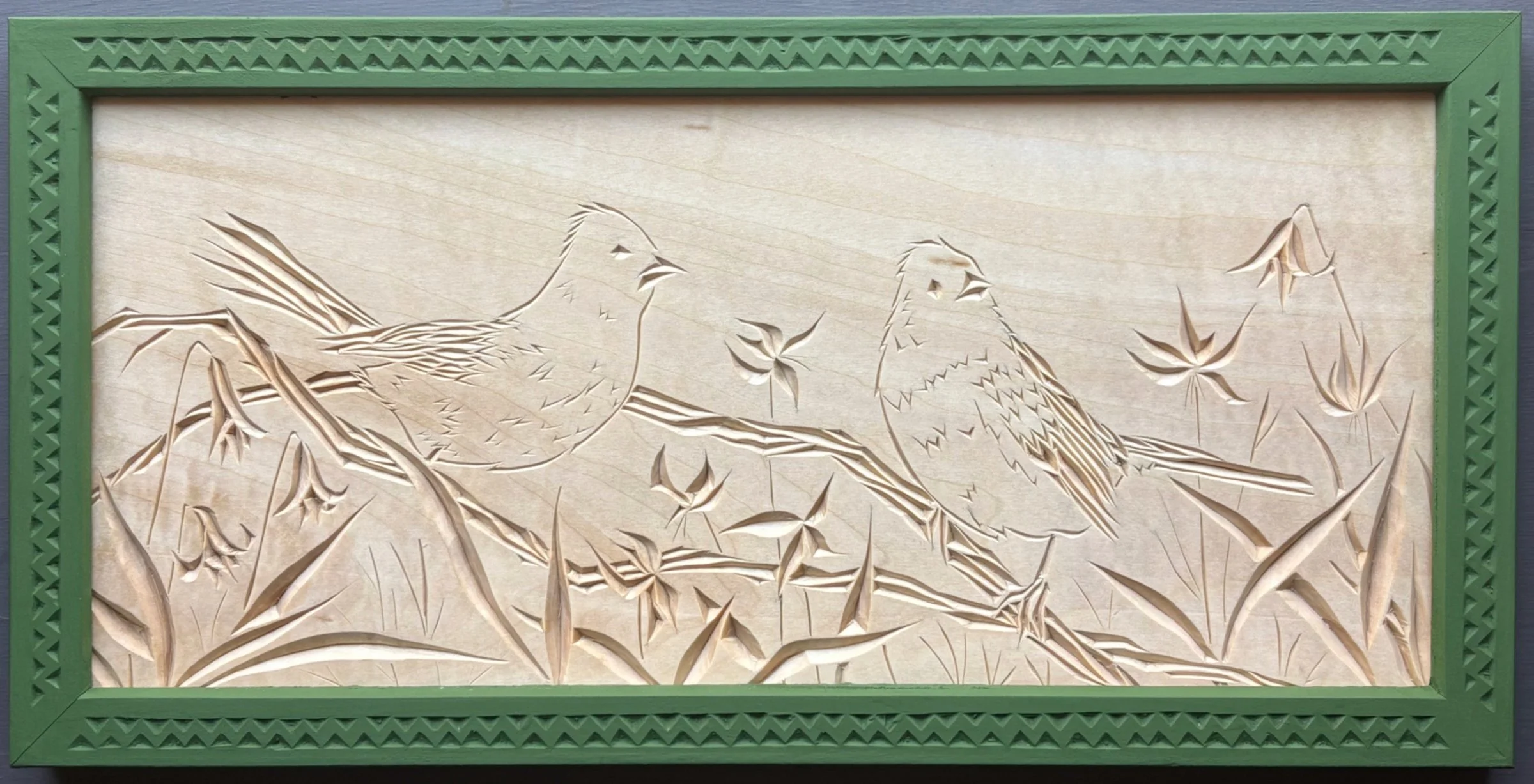
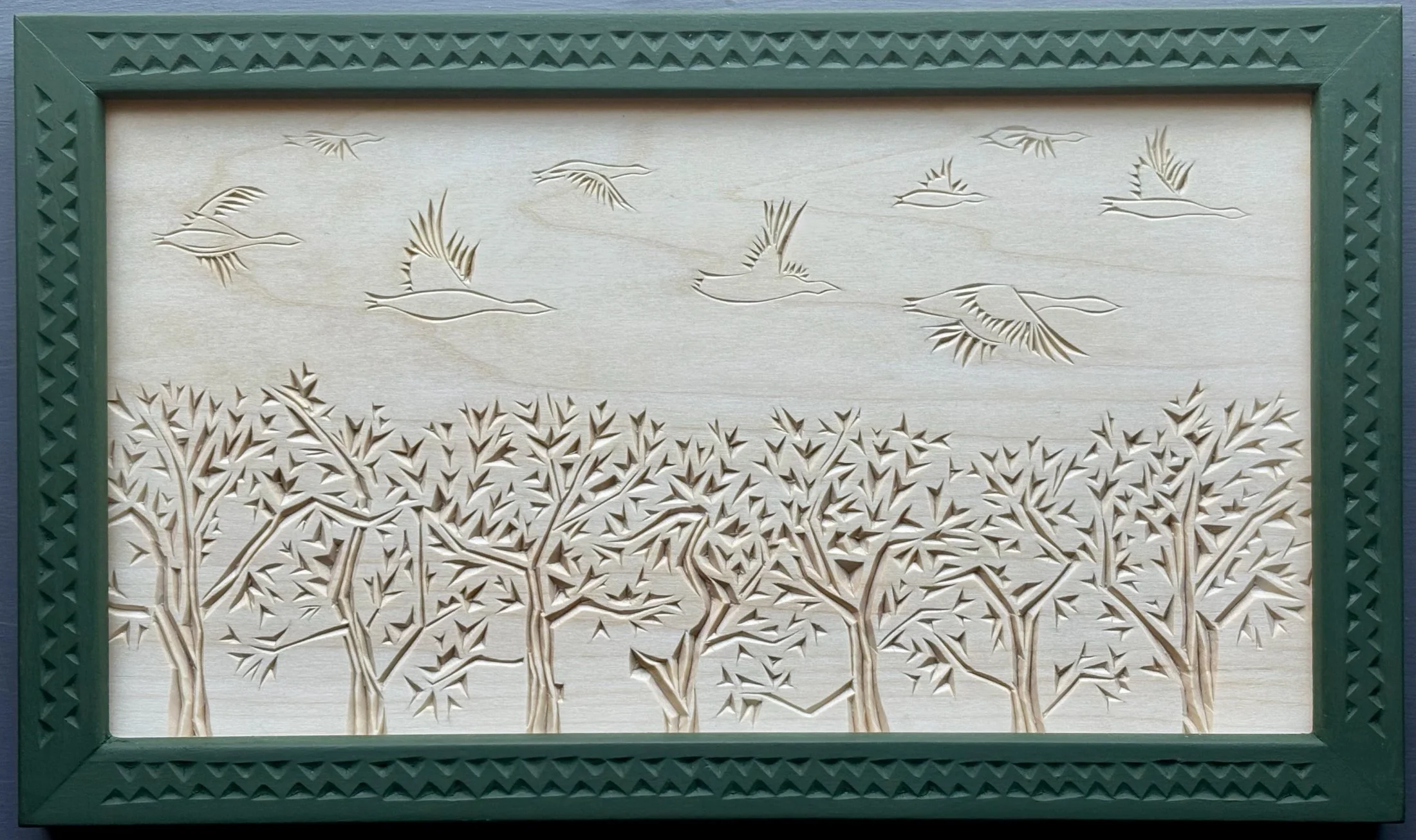
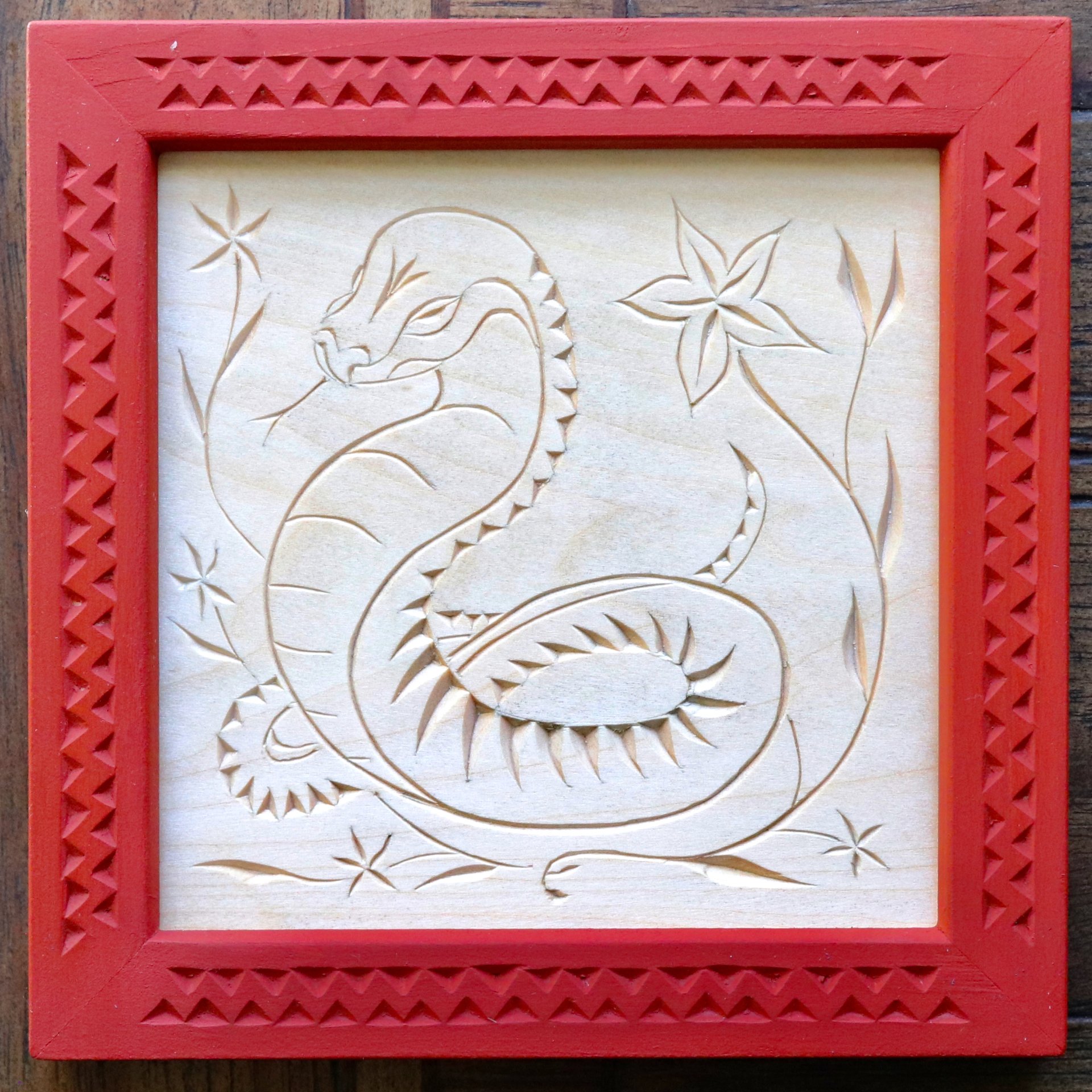
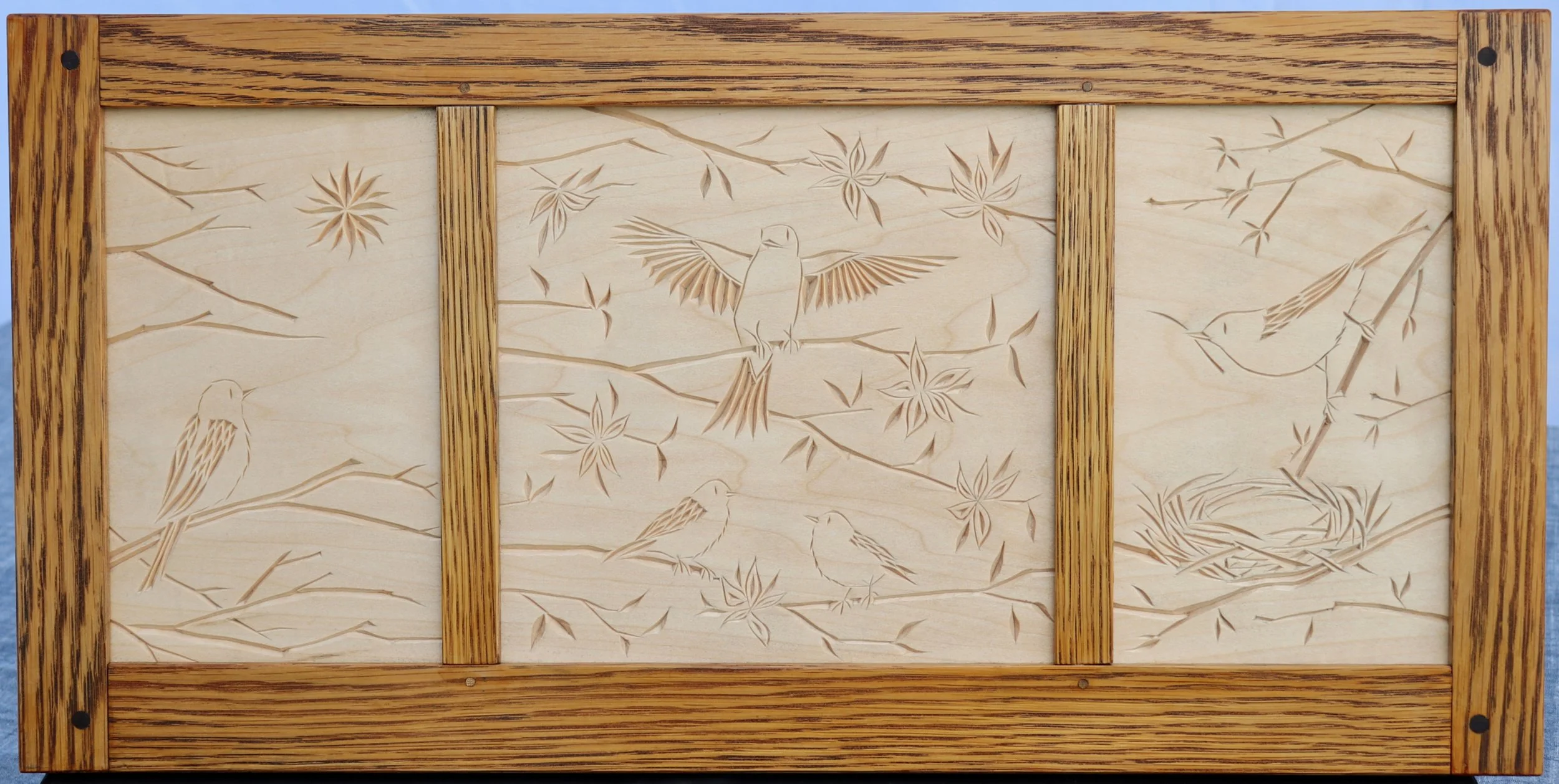
My technique is called chip-carving: using a thin-bladed knife to remove variously shaped chips of wood. Because the chips have triangular cross-sections, the resulting facets create a pattern of light and shadow characteristic of this kind of carving, and not reproducible by machine. For occasional details I may also use a small gouge (birds' eyes, berries) or an awl (stippling on flower-heads), but otherwise, I allow the limits of chip-carving technique to guide my design.
All my work is in basswood, which has been prized by woodcarvers for centuries for its smooth, soft texture.
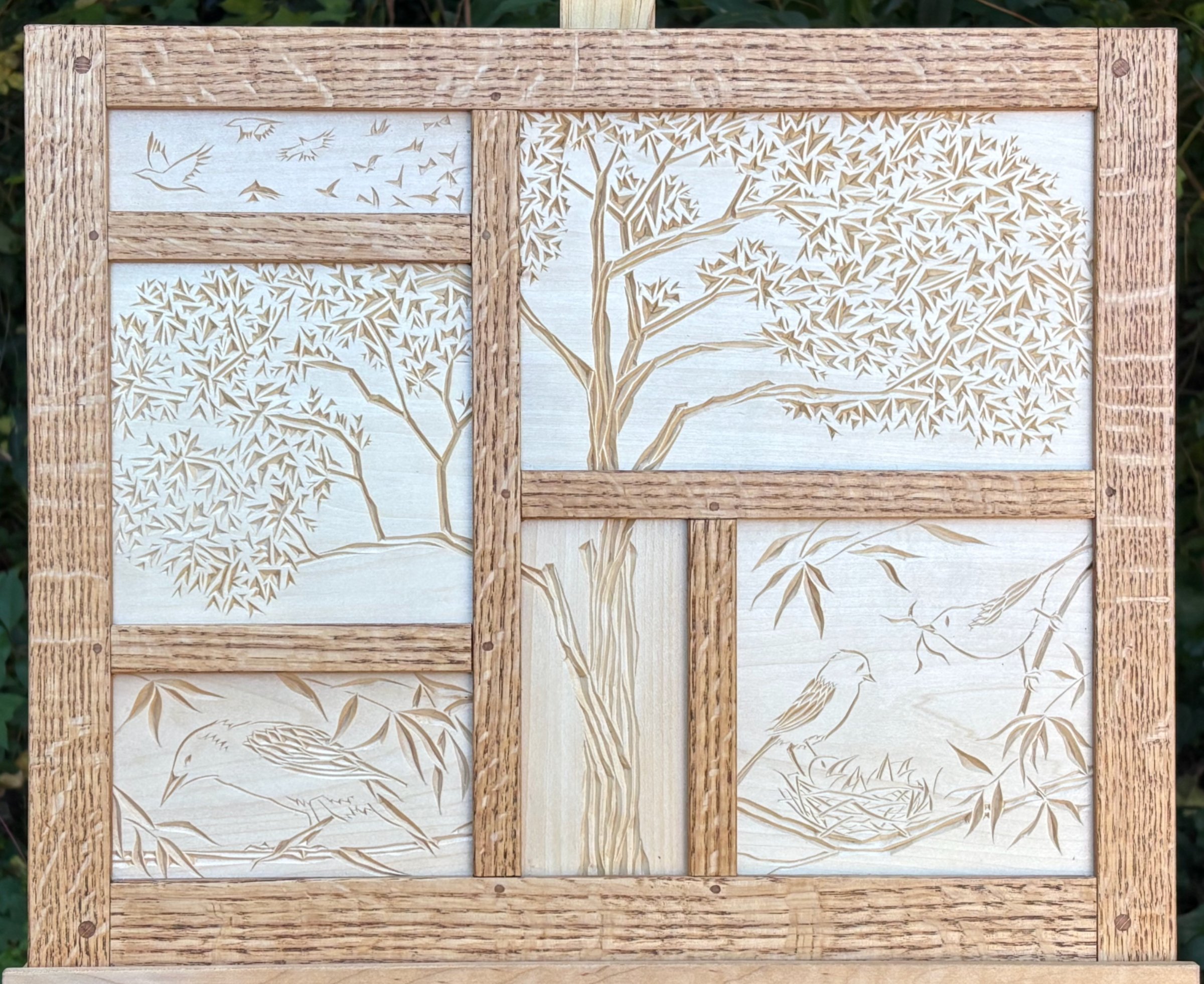
Single-panel frames are chip-carved and painted. For polyptychs I use found windows or build custom frames using hand tools with traditional pegged mortise-and-tenon joinery. I consider the frames integral to the work, and finish them accordingly. Paint may evoke a mood or details of the work (red for the ruby throat of a hummingbird, bright green for a spring garden). My six-panel carving of a willow oak is framed in red oak like the wood of the tree depicted, and the grain of the wood accentuated.
To the extent possible I use natural finishes and solvents: food-safe milk paint, shellac mixed with 95% ethanol, pure walnut or linseed oil, and beeswax. Hand tools need no electricity, and when I work big, I compost my shavings.